

Robot Rental Software Handover: Define the Ready State
2026-10-31
Robot Rental Software Handover: Define the Ready State
A rental handover sheet that says software running leaves an important question unanswered: running in what sense? A process can be present while the promised application task remains unavailable. Robot rental software should therefore be accepted against a defined readiness observation, rather than an unexplained green indicator. The following discussion uses a fictional ROS-based delivery to frame that conversation. It does not authorize starting equipment, changing a node state or relying on software status as a physical safety check.
Name the application task behind the word ready
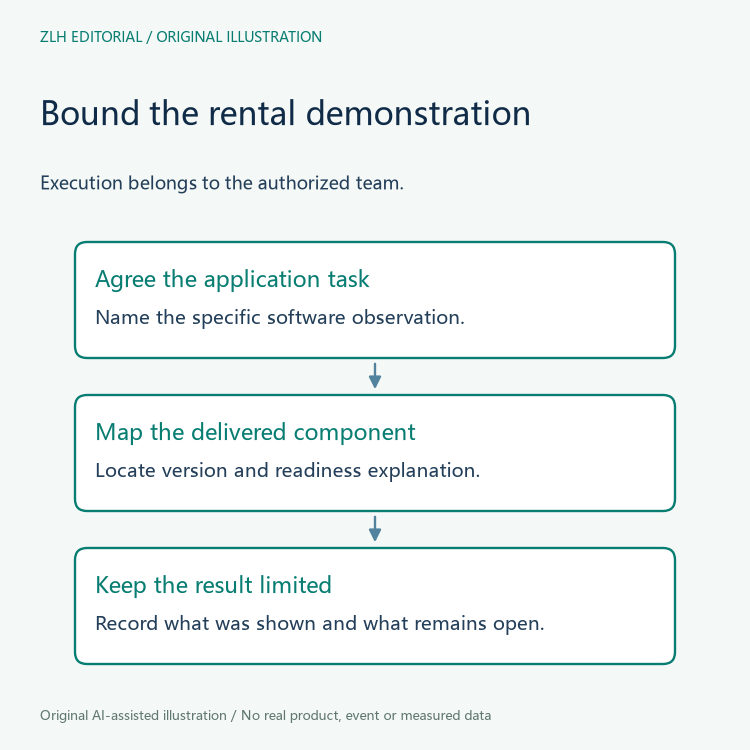
The first handover question belongs to the rental agreement: what software task is the receiving team meant to be able to observe? It might be viewing a demonstration stream in an isolated environment or inspecting an agreed output. The responsible parties should name that task and the evidence expected for it. A supplier should not have to guess which unstated capability the buyer intends to include under ready.
Separate that task from a list of processes shown on a screen. The list can be useful evidence about software presence, but a reviewer still needs an explanation connecting the relevant component to the promised task. If that explanation is missing, record it as a handover question. Do not infer that the entire package is defective, and do not fill the gap by attempting state changes on rented equipment.
Read the component's declared lifecycle
The ROS 2 Managed nodes design document describes primary states including Unconfigured, Inactive, Active and Finalized. It gives managed software a defined lifecycle interface. These are concepts for applicable components, not a claim that every program in a rental package implements that interface. Request the supplier's explanation of which delivered components are managed and which use another readiness mechanism.
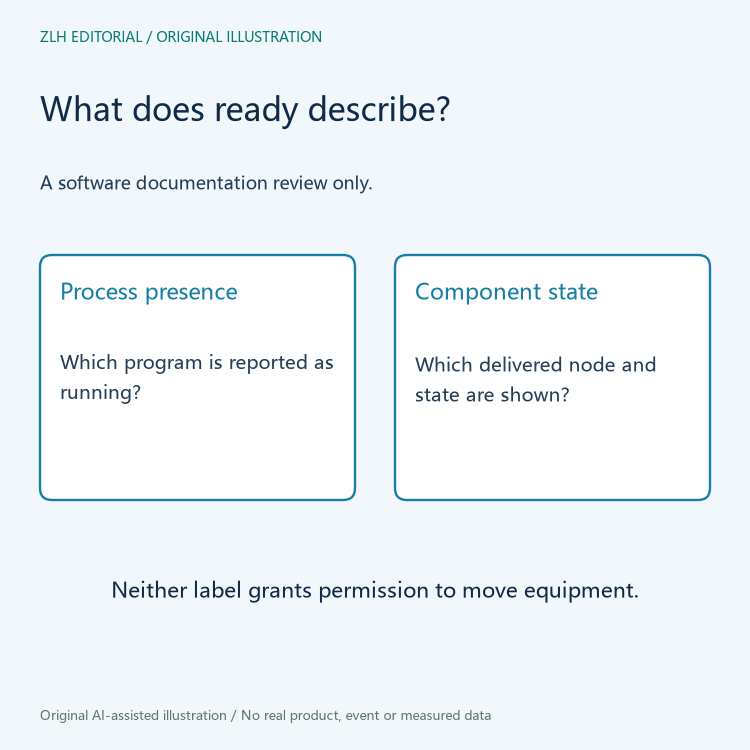
For the fictional delivery, the buyer can ask what a displayed state means for one named component. The answer should refer to the applicable implementation and version, not merely reproduce a general state diagram. A component described as Active may still require other evidence before the agreed application task is accepted. Nothing in the terminology should be promoted into a conclusion about guarded areas, mechanical condition or permission to move a physical robot.
Distinguish process supervision from node state
The ROS 2 Launch System design article separates node and operating-system process concepts, noting that multiple nodes can share a process. This provides a useful reason to ask for a mapping between the supplier's process display and the component under review. The historical design discussion is background; acceptance still needs evidence about the delivered rental package.
Suppose the supplier shows a process as alive while the receiving team cannot identify the application component's readiness indication. The review should preserve both observations rather than forcing them into a single pass or fail. Request the missing mapping and the supplier's intended interpretation. A process identifier alone does not explain the state of every component it may host, nor does an absent screenshot prove a component was never configured.
Agree how an isolated demonstration will be observed
Plan any further exercise with the responsible supplier and rental personnel. The review can identify the component, starting condition, proposed task and evidence to retain, while leaving execution to the authorized team. This article supplies no commands and proposes no automatic transition sequence. Do not replace established commissioning or safety procedures with an editorial software checklist.
During the agreed demonstration, record what the reviewer actually saw and what was explained separately. If only a static state display was provided, keep that limitation. If the application task was demonstrated, name the relevant starting condition and delivered version. A result for one component under those conditions does not automatically accept restart behavior, recovery behavior or other tasks outside the observation.
Preserve readiness questions across the rental boundary
The receiving and supplying teams need a shared place for outstanding software questions. A useful entry identifies the task affected, the evidence already supplied and the particular explanation or demonstration still requested. It should not silently become complete when a new screenshot arrives. Check whether the new material answers the same question before changing the handover conclusion.
Agree who will maintain that entry after delivery. A readiness explanation that exists only in a temporary demonstration window may be difficult for the receiving team to consult later. Request a durable reference within the agreed handover materials, with access suitable for the people who will review it.
Keep the boundary between software evidence and physical readiness explicit in the final note. These illustrations show a documentation review, not an actual lifecycle transition or operating procedure. Our rental handover reading collection covers other scope questions, and the article directory provides further material. An acceptance record is most useful when another authorized reviewer can understand exactly what ready meant, what was observed and what remains unresolved.


