

Robot Rental Handover: Explain Parent and Child Frames
2026-11-01
Robot Rental Handover: Explain Parent and Child Frames
A rental team can receive a mobile robot documentation pack with several frame names and still be unable to explain how those frames relate. This matters when a later team must interpret a demonstration or a recorded transform. Procurement acceptance can first establish whether the relationship is documented. It should not imply that a physical mounting, navigation function or calibration has been checked merely because a diagram looks complete.
Define the frame relationship that the rental pack promises
Ask the supplier which part of the handover contains the frame explanation and which robot configuration it concerns. A marketing view of a platform is not necessarily the same object as a software frame diagram. If the rental arrangement includes optional equipment, the documentation should say whether that equipment is represented in the supplied explanation.
Imagine a fictional delivery containing a general platform guide and an attachment note. The receiver should keep both documents and ask how the attachment's frame is related to the platform description. Similar names are useful search clues, but they do not establish the relationship. The acceptance task is to obtain an explanation that another authorized reviewer can follow without reconstructing the supplier's intent.
Read the tree convention before approving a drawing
REP 105 describes coordinate frame conventions for mobile platforms. In its tree relationship, a frame has one parent while it can have multiple children. The document gives the conventional map, odom and base_link relationship and allows additional intermediate frames. This context matters more than copying familiar names into an otherwise unexplained picture.
For the rental pack, request a clear statement of which relationship the supplied drawing represents. If the supplier uses additional frames, ask for their purpose and references. A buyer should not redraw the tree to fit a remembered minimal example and then treat that edited drawing as evidence about the delivered robot. The supplier's actual configuration remains the object to explain.
Keep the parent and child fields associated with their record
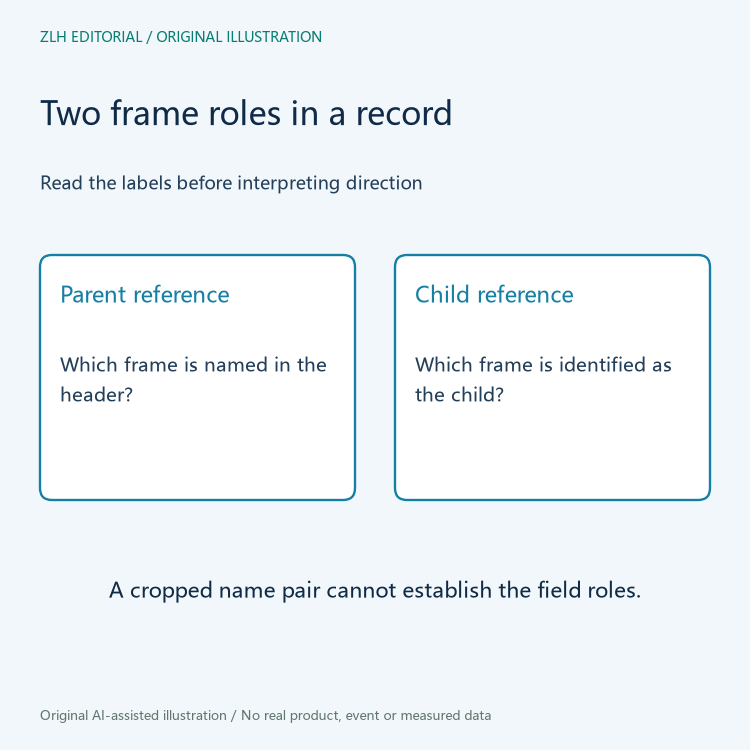
The Jazzy static transform broadcaster tutorial assigns the parent frame through the header's frame identifier and gives the child frame its separate identifier. It also shows a timestamp in the transform record. These documented roles help a receiver ask for an unambiguous explanation of an example. They do not show that any transform in the rental pack was measured correctly.
When a supplier provides an extract, preserve the record with the field labels and its context. A cropped screenshot containing only two names may hide which field each name belongs to. Ask for a readable, appropriately limited extract rather than inferring direction from where the names happen to sit on the page. The purpose is documentary interpretation, not publishing a transform to a live system.
Review attachment changes as a new relationship question
Suppose the fictional rental offer later includes another attachment. The receiver should ask whether the old frame explanation still applies and which document now describes the added relationship. An unchanged platform model name does not answer that question. The supplier can clarify whether a new record is needed or whether the earlier documentation already covers the agreed configuration.
Keep the earlier question and the clarification together. If a demonstration is separately agreed, record the actual configuration and observation under that demonstration's scope. Do not turn a documentation response into an assertion that the attachment was installed correctly. Physical installation, software relationships and navigation behaviour are related engineering concerns, but each requires evidence appropriate to the claim being made.
A separate return checklist can reference the accepted documentation without claiming that the return condition was examined in the same review. For example, the next team may need to know whether the attachment note belongs to the configuration that was hired. Preserve that association as a documentary fact, then let the responsible rental staff record any actual equipment inspection through their established process.
Write a handover note that survives the next rental period
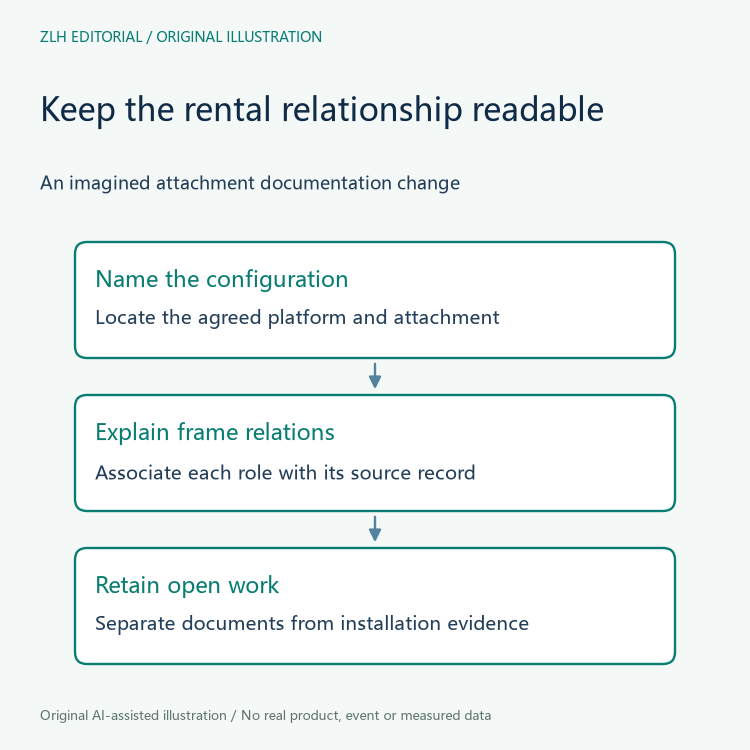
The final note should identify the reviewed configuration, the parent and child relationship explanation and any unresolved references. If a field label remains unreadable or a document has not been supplied, leave that item open. A narrower statement that can be checked is more useful to the next rental team than a broad assurance unsupported by the received material.
The original illustrations contain no transform values, live records or installation results. Related background appears in the robot rental documentation section and the article directory. A clear frame explanation helps a team interpret what was supplied while keeping operational acceptance and physical verification visible as separate work, rather than hiding them inside an attractive diagram.


