

OBI 1.0 News: Observing Rental Software Is a Separate Scope
2026-11-02
OBI 1.0 News: Observing Rental Software Is a Separate Scope
A robot-rental demonstration may include both a physical machine and software used to present or manage the demonstration. Observing the software does not automatically evaluate the machine. OpenTelemetry eBPF Instrumentation’s October 2026 v1.0 milestone makes that scope distinction timely. This article reads the project announcement and documentation on November 2, 2026. It develops a hypothetical rental discussion, without installing instrumentation, attaching probes, or collecting information from any real rental system.
The milestone concerns application observability
The October 30 OBI announcement introduces v1.0.0 and describes observability for running Linux applications without requiring source-code changes. The project documentation describes application telemetry for supported Linux workloads. These statements locate the project in software observation, with an actual support scope.
They should not be expanded into a claim that any robot, controller, or operating environment can be fully inspected automatically. The article has not checked a particular workload against that scope. A real use would require the responsible people to identify the system and the conditions involved.
A rental demonstration has more than one object
Imagine a fictional rental provider showing a scheduling page beside a robot demonstration. The scheduling page is software; the machine demonstration concerns another set of activities. If the provider discusses application request telemetry, the reader should know which software activity is being observed.
That activity might be relevant to the service experience, but it cannot alone establish physical task performance. A web request completing and a machine completing an agreed demonstration are different observations. The rental discussion should retain both objects rather than collapse them into a single “system passed” result.
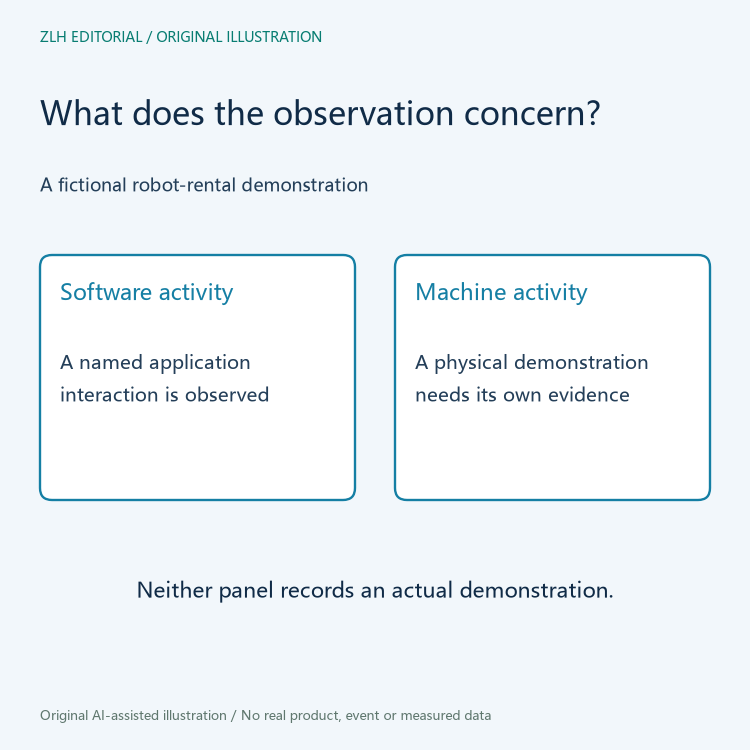
This example contains no real booking, robot action, or telemetry sample. The distinction can be explained without inventing a successful demonstration. It is about keeping an observation attached to the object that produced it, not about choosing a monitoring tool for a particular provider.
Source-code convenience is not unlimited observation authority
A tool’s ability to work without source-code changes concerns one aspect of adoption. It does not remove the need to understand whose environment is involved and what information would be collected. A rental handoff should not treat a software announcement as permission to instrument another party’s machine or service.
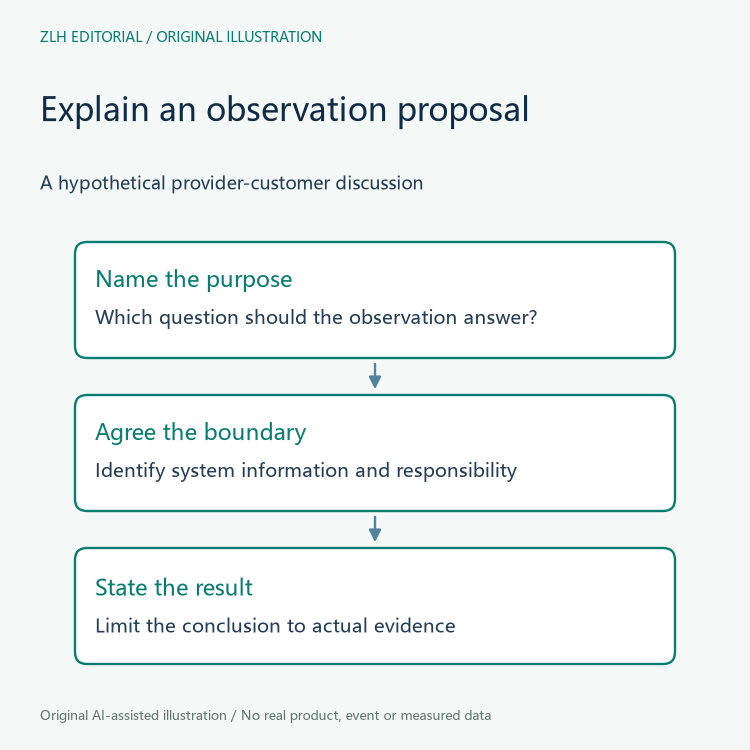
In the fictional conversation, the provider and customer can first agree which demonstration information is needed and who is responsible for producing it. They can then determine an appropriate way to obtain that information. The article initiates no monitoring and requests no server access.
Ordinary readers also should not need to learn every implementation detail simply to understand the proposal. The provider can state the observation’s purpose, system boundary, and limitations in plain language. That explanation is part of a clear service description, independent of which tool might eventually be selected.
A version milestone does not freeze every signal forever
The OBI announcement discusses compatibility and telemetry evolution. A reader should keep the project’s documented commitments at their stated scope rather than infer that every emitted item can never change. The appropriate release material remains the source for specific commitments.
For the hypothetical rental provider, the practical question is which observation its demonstration report depends on. If the underlying tooling changes later, the report’s interpretation may need review. That is a proposed planning question, not evidence that any particular upgrade has changed a real provider’s results.
Define the demonstration conclusion before collecting more data
A rental discussion can become clearer by naming the result it wants to establish. If the question concerns a scheduling page’s response, application observation may be relevant. If it concerns a physical task, the parties need evidence appropriate to that task. Collecting more software telemetry does not erase the distinction.
Our fictional review could keep separate notes for the software activity, the agreed machine demonstration, and the relationship between them. Unchecked items can stay open. The example supplies no latency targets, sensor parameters, or acceptance score that readers might mistake for a real contract.
This scope discipline allows observability news to inform a service conversation without turning it into a blanket assurance. A new project milestone can be useful context while the actual rental arrangement still requires its own explanation. The two levels of discussion should remain visible.
The fictional parties could review the proposed report before deciding whether any additional collection is useful. If the report cannot explain how an observation relates to the agreed question, adding another dashboard would not resolve that ambiguity. Clarifying the question first keeps the proposed activity proportionate to its stated purpose, without presuming an operational outcome.
Related topics appear in our robot rental scope section, and the reading directory contains more articles. Both original diagrams show conceptual boundaries only. They contain no captured traffic, machine state, rental customer details, or evidence of a completed demonstration.


