

Robot Rental Calendar Handover: Identity and Revision
2026-11-02
Robot Rental Calendar Handover: Identity and Revision
A calendar handover can help a rental team coordinate a planned activity, but a calendar entry is not a rental approval or a completed delivery record. When a supplier exports scheduling material, the receiver should distinguish the identity of the calendar component from its revision. This article proposes a technical acceptance checklist for a fictional robot-rental workflow. It imports no file, sends no invitation, and changes no real booking.
Name the component before discussing an update
Ask the supplier what the prepared calendar component represents. It might concern a proposed discussion or another coordination activity. The handover should not leave the receiver to infer that role from a brief title. Its relationship to the rental process needs an explicit explanation.
The component’s technical identity also deserves a separate place in the delivery note. A visible title can be edited and may be shared by unrelated activities. A reviewer should not use title matching as the sole basis for deciding that two exported items refer to the same component.
Ask the coordinator which comparison the receiving team is expected to make. They may need to distinguish a revision from a separate planned activity, rather than simply arrange entries by displayed wording. Keep that intended comparison in the checklist. It gives the supplier a concrete question to answer and prevents the technical identifier from becoming a vague substitute for the rental team’s actual coordination purpose.
In the fictional review, no actual component is supplied. Keep its identity unresolved until the owner provides the material. Adding a made-up booking number would make the example look operational without supplying the evidence the checklist is intended to request.
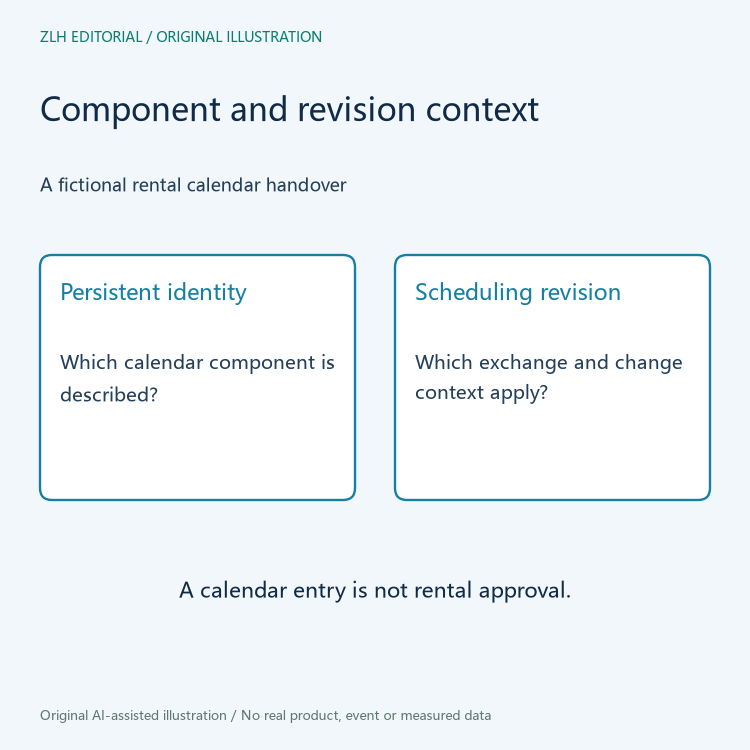
Keep persistent identity distinct from displayed wording
RFC 5545 defines UID as the persistent, globally unique identifier for the calendar component. That gives a technical context for an identity field. It does not prove that an arbitrary supplied identifier was generated correctly or that its component represents an approved rental action.
For a later authorized review, ask the supplier how the actual exported material preserves that identity across the intended exchange. The buyer needs the specific component context, rather than an undifferentiated claim that the calendar file is unique.
Do not infer equipment identity from the calendar identifier. A component can coordinate an activity involving equipment without becoming the serial number or configuration record for that equipment. Keep those relationships separately documented when they matter to the real workflow.
Read revision information with the scheduling method
RFC 5546 describes scheduling exchanges and the use of SEQUENCE for organizer revisions, with behavior depending on the scheduling method and change context. The acceptance note should therefore explain the actual kind of exchange instead of treating a larger number as a complete account of every update.
The receiver should ask which component the revision concerns, who is acting in the relevant scheduling role, and what message context applies. These questions remain technical document questions. They do not establish who has authority to approve a rental or alter commercial arrangements.
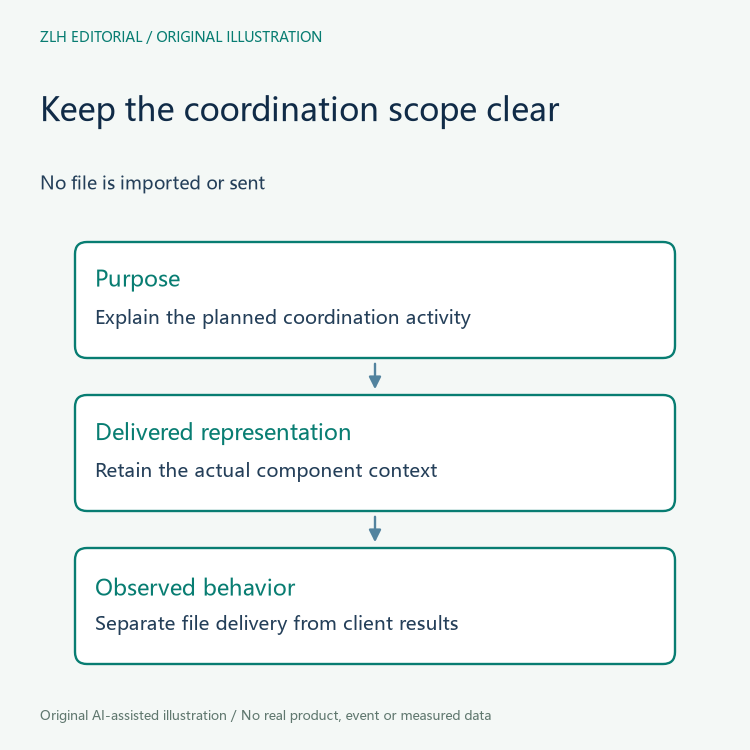
This checklist does not invent sequence values or quote an invitation from a real calendar. Documentation examples explain format behavior; they should not be copied into a supplier’s activity history as if they were observed exchanges.
Separate file acceptance from client behavior
A supplied calendar file and a receiver’s calendar application are different parts of the handover. The supplier should explain which representation was delivered and what client behavior was actually checked, if any. A file being available for download is not evidence that an update appeared correctly in a particular application.
If a later authorized exercise imports prepared material, retain the actual input and observed scope. Do not create duplicate invitations in a real schedule merely to make a demonstration look complete. The present article performs no import or scheduling operation.
The receiver should also keep unanswered questions visible. An uncertain identity or revision relationship should go back to the supplier. Guessing that an entry is the latest because it has a newer-looking title discards the technical context the review needs.
Keep the rental conclusion outside the calendar label
A clear handover record identifies the component, the revision context, and the actual exchange or client observation. Those facts can support coordination. They do not establish equipment condition, site readiness, delivery acceptance, or contractual approval.
When the scheduling material changes, state which relationship needs rechecking. Preserve earlier records with their actual scope rather than rewrite them as evidence about the new component state. This makes the technical handover easier for another coordinator to follow.
More examples appear in our robot rental handover section and the reading directory. The two original illustrations contain no actual identifiers, event times, attendee details, invitations, or completed rental activities.


