

Rental Calendar Maintenance: Identify the Affected Instance
2026-11-02
Rental Calendar Maintenance: Identify the Affected Instance
A recurrence instance needs to be identified when a rental-calendar change appears to affect more activity than the coordinator expected. A recurring series and one occurrence are different objects of investigation. Before editing the schedule again, retain the supplied material and the scope of the reported change. This article describes a proposed maintenance review, sends no calendar message, and changes no real rental arrangement.
Record whether the symptom concerns one occurrence or the series
Ask the coordinator what was observed in the receiving calendar. Did one visible occurrence change, did several disappear, or is the extent still unclear? Preserve that account without immediately attributing it to the sender, receiving client, or file format. The observation and its explanation are separate parts of the record.
Identify the supplied component and the receiving context. A screenshot can help describe the symptom but may not reveal the scheduling message or its properties. The maintenance note should distinguish visible calendar behavior from information actually inspected in the delivered representation.
For the fictional investigation, no event times, attendee details, or booking references are supplied. Leave those fields unresolved until authorized material is available. Inventing a plausible rental calendar would create an apparent operational history that the proposed review does not possess.
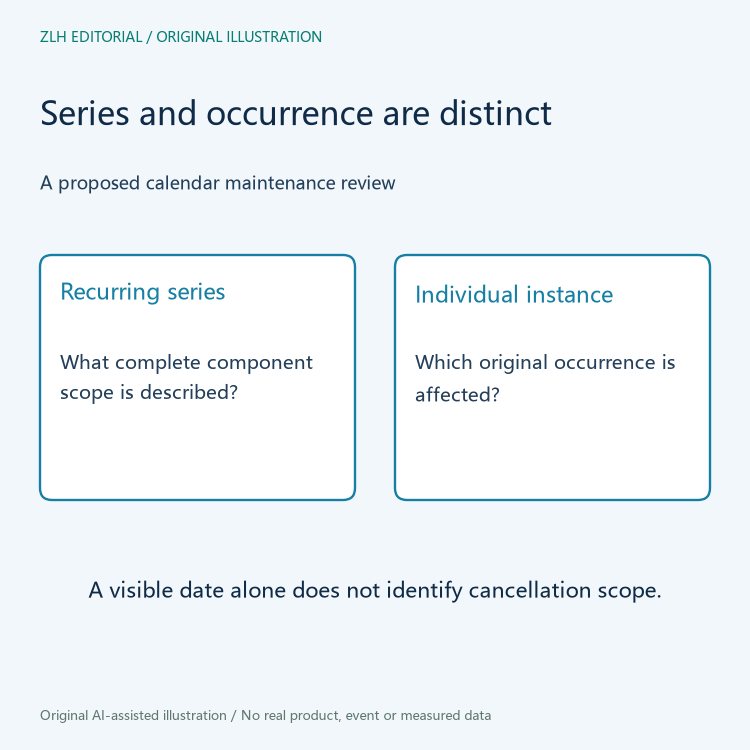
Retain the original identity of the recurring occurrence
RFC 5545, section 3.8.4.4, describes RECURRENCE-ID in conjunction with UID and SEQUENCE for identifying an instance of a recurring component. Its value uses the original DTSTART value for the recurrence instance. That distinction matters when a displayed occurrence has been moved.
A reviewer should therefore ask how the original instance identity remains associated with the changed presentation. The newly displayed start should not automatically be treated as a replacement recurrence identity. The supplier needs to explain the applicable representation rather than infer it from a calendar title.
The specification describes the format. It is not evidence that a real message used the property correctly. A maintenance conclusion requires the actual component, the relevant properties, and the observed receiving behavior. This article supplies none of those as a completed test.
Read cancellation scope before assigning the effect
RFC 5546, section 3.2.5, distinguishes cancellation of a recurring event from cancellation of an individual instance. It describes the role of RECURRENCE-ID in that distinction and discusses additional instance-range cases. The actual message context must therefore remain part of the investigation.
Ask whether the received material concerns the whole series, one instance, or another explicitly documented scope. A generic cancelled label may conceal that difference. Do not conclude that every related rental activity was withdrawn solely because one occurrence is no longer visible in a particular view.
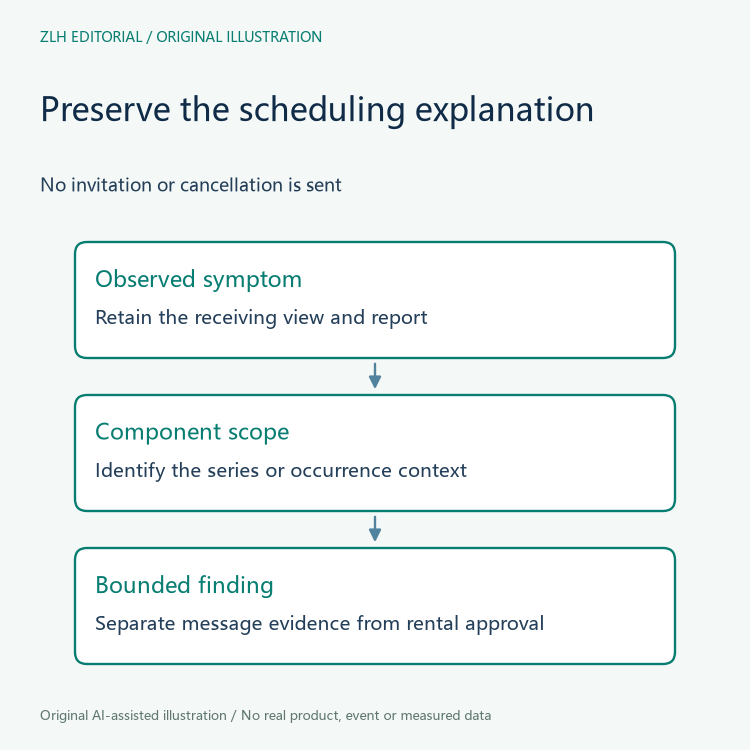
Likewise, a series-level change should not be summarized as an isolated occurrence correction without evidence. Preserve the message and the interpretation separately. The review should explain which part of the scheduling representation supports the claimed scope.
Keep client presentation distinct from the message record
A receiving calendar can present occurrences in a convenient view while the underlying component carries more context. Ask which representation the maintainer actually inspected. A refreshed display does not by itself identify the original message or establish why an occurrence changed.
If an authorized review later compares material across clients, record each environment and observation. A difference between displays should remain a bounded observation until the evidence supports an explanation. Do not invent an import error or an unperformed synchronization test to complete the report.
Define a correction without issuing an unintended schedule change
Before any separate authorized correction, the responsible coordinator should identify the intended series or instance and the expected scope. A maintenance note can request that clarification without sending a new invitation or cancellation. The present article performs neither action.
Keep the original material beside any revised delivery so another reviewer can understand what changed. Replacing the component and retaining only a reassuring calendar screenshot can lose the identity relationship that caused the question in the first place.
Close the calendar issue within its actual authority
A useful explanation connects the reported symptom, component identity, recurrence scope, receiving context, and observations actually made. It should distinguish a technical scheduling representation from approval of a rental change. Equipment readiness, commercial terms, and delivery acceptance remain separate matters.
Ask who owns the unresolved scheduling question and which evidence is still needed. A clear open item is preferable to a fictional successful cancellation or restoration. No claim about a real coordinator’s actions is made here.
More notes appear in our robot rental records section and the reading directory. The original diagrams contain no real appointments, customer data, invitation messages, cancellation results, or completed rental activities.


