

Node 26 Enters LTS: What a Rental Portal Record Needs
2026-11-03
Node 26 Enters LTS: What a Rental Portal Record Needs
A rental portal can depend on software whose upstream support status changes without the portal itself being updated. Node.js 26's October LTS transition is a useful example. A rental operator reading the announcement should be able to distinguish the status of the upstream release line from the runtime identified in a particular service record. Those descriptions can inform a support conversation, but they do not answer the same question.
What changed in the October release status
The official Node.js release post dates version 26.13.0 to October 28, 2026. It marks the 26.x line's transition to Long Term Support under the Lithium codename, with updates planned through the end of April 2029. It also states that, apart from metadata updates reflecting LTS, the release includes no further changes from 26.12.1.
The project's release record repeats that transition information. Both are upstream project material, not an independent test of a rental portal. Keep that role clear when citing them. This article does not determine whether a reader's service uses Node.js, which package it has installed or whether any change is appropriate for its environment.
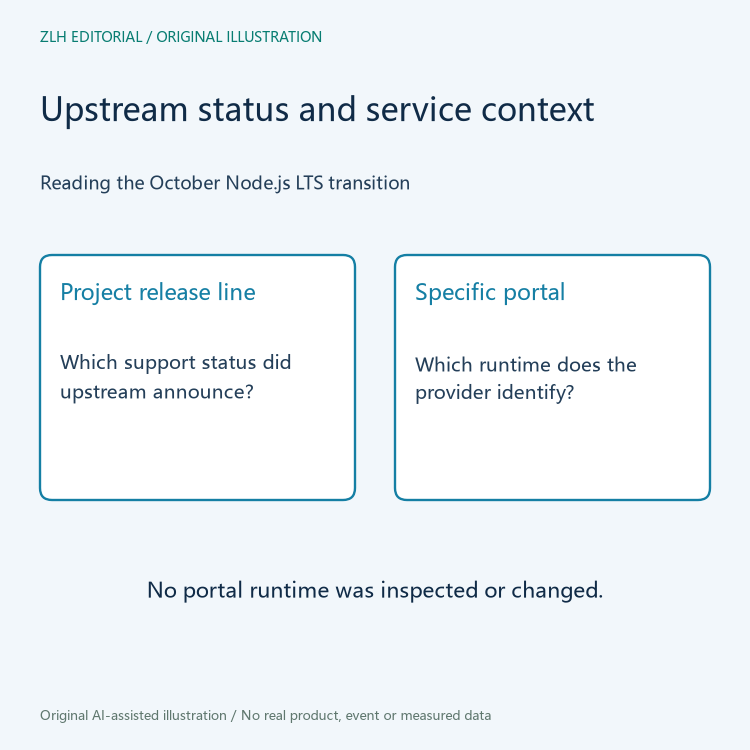
Identify the runtime that belongs to the service record
Consider a hypothetical portal handover containing an application description and a general link to a runtime download page. The recipient still needs an explanation of the runtime associated with the supplied service. A current download page describes available upstream material; it does not establish the particular instance that the provider is operating. Ask the responsible provider to identify the service and the runtime information relevant to that record.
The explanation should remain attached to its service context. If several environments exist, a statement about one should not silently become a statement about all of them. A development environment described during a demonstration may differ from the environment used for an operational portal. This article does not assert that any provider has such a difference; it identifies an ambiguity that a clear handover can avoid.
A dated record also makes later discussion easier. When the provider supplies a new statement, keep it clear whether it updates the earlier information or concerns another environment. The recipient should not have to infer this solely from a larger version number. A useful record tells readers which service the statement describes and when its author supplied it.
Translate support language into an answerable responsibility question
An upstream LTS announcement describes the project's release policy. A service arrangement should separately explain who maintains the supplied portal and where the recipient directs support questions. These responsibilities should be stated by the provider. The existence of an upstream support period does not specify a commercial maintenance agreement or establish that a provider applies every update as soon as it appears.
For a rental business, a practical follow-up is to ask which materials document that responsibility for the actual portal. The answer may refer to the provider's service documents and contact process. This publication has not inspected a contract or evaluated a support commitment. It therefore supplies no conclusion about an operator's entitlement, service coverage or future continuity.
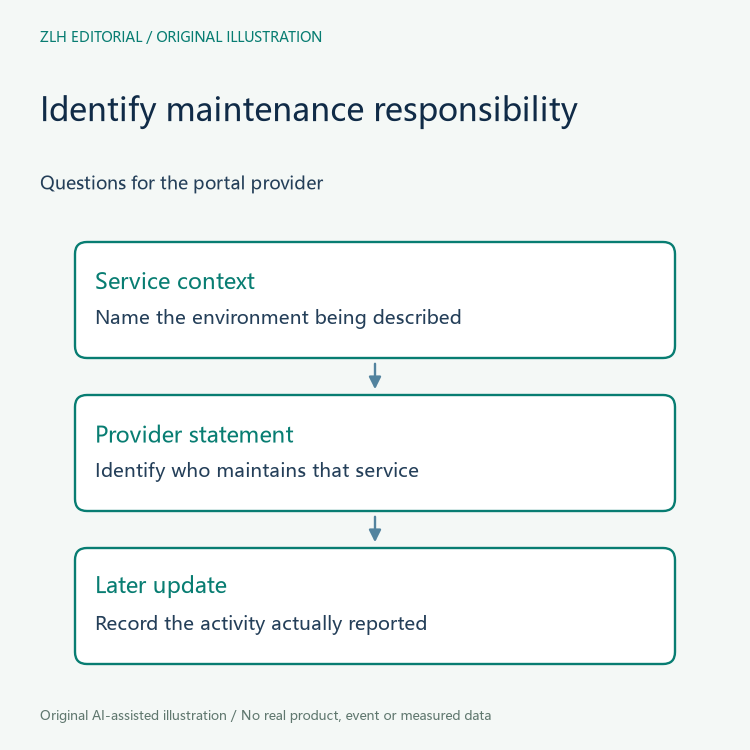
Do not turn release news into an undocumented upgrade
The October metadata transition should not be interpreted as a recommendation to change an operational service during a news review. A real maintenance proposal would need its own scope, applicable documentation and authorized decision. It should identify what is being changed and what observations will be collected. No packages, production processes or runtime settings were changed for this article.
If a provider later reports maintenance, ask how that report relates to the existing service record. A clear update can explain the particular environment and the work actually performed. It should avoid using the upstream announcement as retrospective proof that a local change occurred. The announcement is background evidence for the release status, while the provider's own record explains its service activity.
Keep the two timelines useful to portal readers
The upstream release timeline and the provider's maintenance timeline can be read together when their roles are explicit. The first says what the project published and how it describes the release line. The second must identify the actual service information supplied by its operator. Combining them carefully supports informed questions without inventing a deployment history.
Both original diagrams are document-reading aids, not a portal architecture or a maintenance result. Further topics appear in our robot rental software collection and article directory. An LTS transition is useful news when it leads to a precise service question; it should not substitute for the answer that the responsible provider still needs to give.


